
Painting artificial grass: tips and techniques
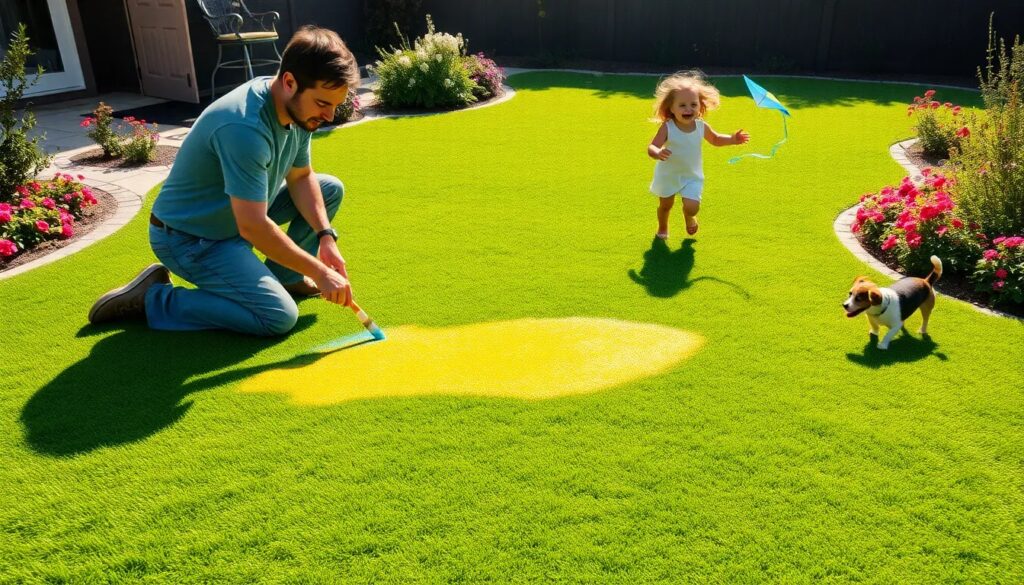
Artificial turf offers a green, maintenance-free landscape all year round. However, over time, it may need some refreshing or marking, which can be accomplished through painting. This guide provides insights into the techniques and best practices for painting artificial grass.
How to paint artificial turf: step-by-step guide
To effectively paint artificial turf, it’s crucial to follow a structured approach. The first step is to prepare the surface by thoroughly cleaning the turf to remove any dirt, debris, or residues that might interfere with paint adherence. Ensure that the turf is completely dry before starting the painting process.
Next, choose the right paint. Water-based acrylics are often recommended due to their turf-safe properties. These paints not only provide vibrant color but also ensure that the turf remains undamaged. Once you have your paint ready, use a spray gun or roller for an even application.
Apply the paint in thin coats, allowing each layer to dry before adding another. This method helps to achieve a uniform finish without saturating the turf, which can lead to clumping. Always follow the manufacturer's instructions for drying times and application techniques.
What kind of paint do you use on artificial turf?
When selecting paint for artificial turf, it’s essential to choose products specifically designed for synthetic surfaces. Turf-safe paints, such as water-based acrylics, are ideal as they do not damage the fibers. Additionally, consider using paints formulated for outdoor use to ensure durability against weather conditions.
- Water-based acrylics: These are popular choices that provide vibrant colors and good adhesion.
- Synthetic turf paint: Specially designed for artificial surfaces, ensuring no damage to the turf.
- Athletic field marking paint: Ideal for creating lines or logos on sports fields.
- Temporary turf paint: Useful for short-term applications, such as events or games.
- Industrial-grade traffic marking paint: Suitable for high-traffic areas, offering improved longevity.
It's important to avoid using oil-based paints or harsh chemicals, as these can harm the artificial fibers and affect the turf's lifespan. Always prioritize durability and safety when selecting your paint.
How long does paint last on artificial turf?
The lifespan of paint on artificial turf can vary based on several factors, including the type of paint used, the weather conditions, and the amount of foot traffic the area receives. Typically, high-quality water-based acrylic paints last between 3 to 5 years with proper application and maintenance.
In areas with heavy usage, such as sports fields, the paint may wear off quicker, necessitating more frequent touch-ups. Conversely, if the turf is in a less-trafficked area, the paint can maintain its appearance for a longer period. Regular inspections and maintenance can help extend the life of the paint.
Can you recolor artificial turf?
Yes, you can recolor artificial turf effectively. This process is often necessary for fading grass due to sun exposure or wear and tear. Using an appropriate acrylic outdoor paint, the turf can be refreshed to retain its vibrant appearance.
Before recoloring, ensure that the surface is clean and dry. It is advisable to match the new paint color closely with the existing turf shade. This provides a seamless look and avoids an uneven appearance. Gradual application of coats may help in achieving the desired color without overwhelming the turf.
What are the best paints for artificial turf?
Choosing the right paint is crucial for maintaining the integrity of artificial turf. Below are some recommended paints that have proven effective:
- Sherwin-Williams: Known for its high-quality products, their turf paint offers durability and vibrant color.
- Krylon Fusion: This paint is designed for plastic surfaces, making it a great choice for polyethylene turf.
- Water-based acrylics: Easy to apply and environmentally friendly, ideal for various turf applications.
- Specialized turf-safe paints: These ensure no damage occurs to the fibers during application.
Each of these options provides different benefits, including UV resistance and strong adhesion, which are important for outdoor applications. Selecting the best paint for artificial turf ensures longevity and satisfaction with the results.
How to remove paint from artificial turf?
Removing paint from artificial turf can be challenging, but it is possible with the right techniques. Start by identifying the type of paint used, as this will influence the removal method. For water-based paints, a mixture of warm water and mild detergent can often lift the paint without harming the turf.
If the paint is more stubborn, consider using a turf-safe paint remover. Always test the remover on a small, inconspicuous section of the turf first to ensure it doesn’t cause damage. Scrubbing gently with a soft-bristle brush can help lift the paint without fraying the fibers.
Is painting artificial grass a permanent solution?
Painting artificial grass is not a permanent solution, as the paint will eventually fade or chip due to exposure to the elements and foot traffic. While high-quality paints can last several years, they will require reapplication over time to maintain the turf's appearance.
For outdoor applications, factors such as rain, sun, and temperature fluctuations can impact the longevity of the paint. Regular maintenance and touch-ups can help keep the turf looking fresh and vibrant.
Related questions on painting artificial grass
Can artificial grass be painted?
Yes, artificial grass can be painted using special turf-safe paints. This allows users to restore faded areas or create markings without damaging the fibers.
What paint can be used on artificial grass?
Only turf-safe paints like water-based acrylics and specialized synthetic turf paints should be used. These ensure the integrity of the turf is maintained while providing vibrant color.
How to protect artificial grass when painting?
To protect artificial grass during painting, ensure that the area is well-prepared. Clean and dry the turf before application, and use painter's tape to cover areas that should not be painted. Ensuring good ventilation and applying in moderate weather can also help.
Will paint come off artificial grass?
Depending on the paint used, some can be removed with appropriate cleaners, while others may require more intensive removal methods. Regular maintenance can help prevent paint from deteriorating and chipping off.